DevOps CI/CD Pipelines for Enterprises: A Practical Blueprint
How to design secure, auditable CI/CD pipelines for enterprise and government software — branching, environments, approvals, and observability.
Why Enterprises Still Ship Slowly
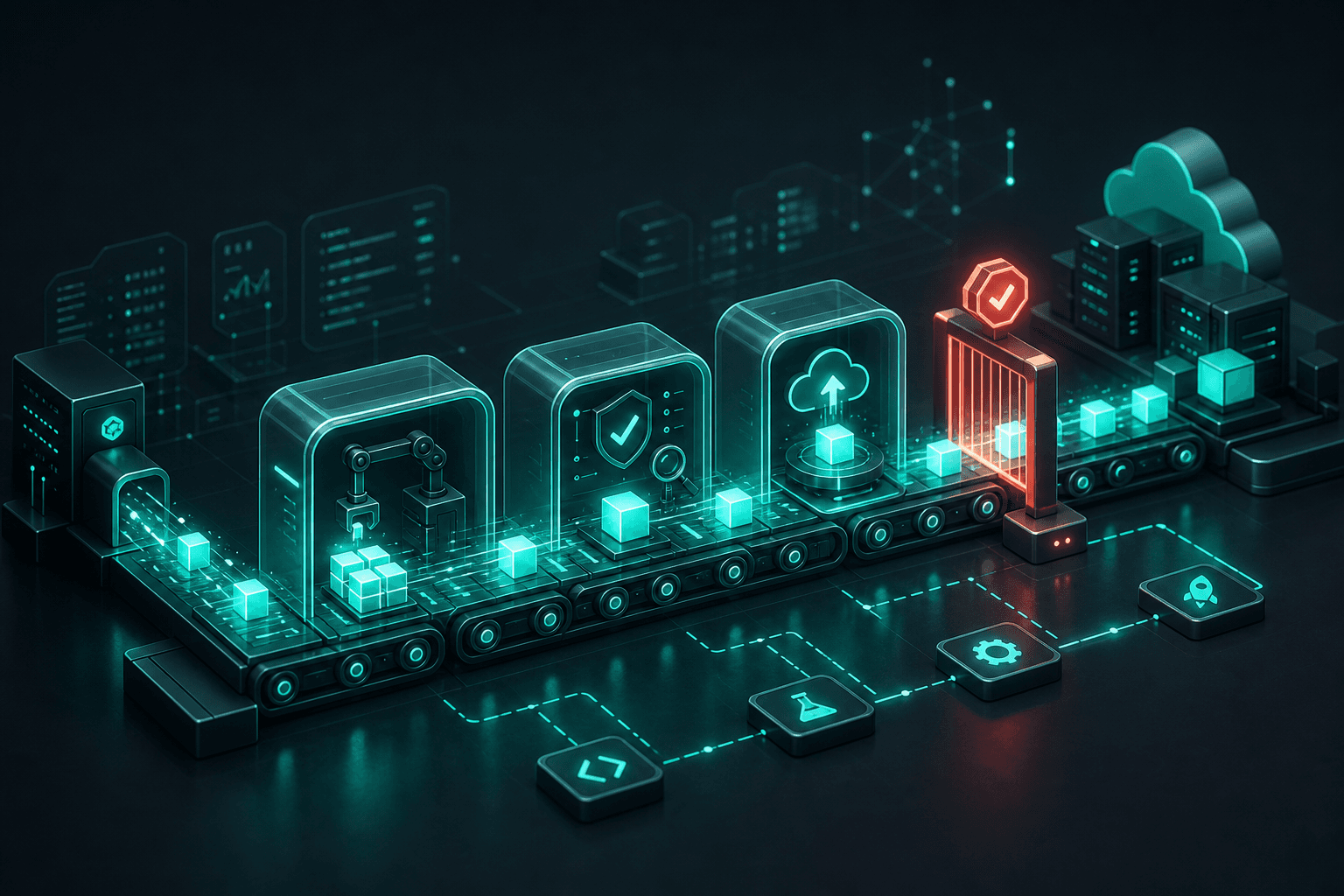
Many teams "have DevOps" but still deploy monthly with weekend freeze windows. The gap is usually process and environment parity — not tooling. A production-grade pipeline encodes build, test, security scan, and promotion rules so releases become routine.
Pipeline Stages That Matter
Every enterprise pipeline should make the same guarantees.
- Build: reproducible artifacts from tagged commits
- Test: unit, integration, and smoke suites with quality gates
- Security: SAST, dependency scanning, container image scanning
- Deploy: staged promotion (dev → staging → prod) with approvals
- Observe: health checks, rollback hooks, deployment markers in APM
Branching and Environments
Trunk-based development with short-lived feature branches reduces merge pain. Protect main with required reviews and green CI. Map environments to infrastructure-as-code so staging mirrors production configuration — not just "similar enough."
Compliance Without Slowing Delivery
Government and banking clients need audit trails: who approved what, which artifact shipped, and what tests ran. Capture pipeline logs, signed artifacts, and change tickets. Automate evidence collection so compliance is a byproduct of delivery, not a separate project.
Getting Started in 30 Days
Week 1: inventory current release process and failure modes. Week 2: standardize builds and tests for one critical service. Week 3: add security scans and staging auto-deploy. Week 4: production promotion with rollback drills. Expand pattern to remaining services after the first success.
Frequently asked questions
Related articles
Cloud Migration Checklist 2026: A Step-by-Step Enterprise Guide
The complete cloud migration checklist — from discovery and TCO analysis through cutover, validation, and post-migration optimization.
AWS vs Azure for Enterprise: An Honest 2026 Comparison
AWS vs Microsoft Azure for enterprise workloads — comparing services, pricing, compliance, and which platform fits different organizational profiles.
Legacy System Modernization: From Monolith to Cloud-Native
Strategies for modernizing legacy enterprise systems — strangler fig pattern, API layers, database migration, and minimizing business disruption.