What Is a Software AMC? Annual Maintenance Contracts Explained
A plain-English guide to software Annual Maintenance Contracts (AMC) for Sri Lankan businesses — what is covered, how pricing works, and when you need one.
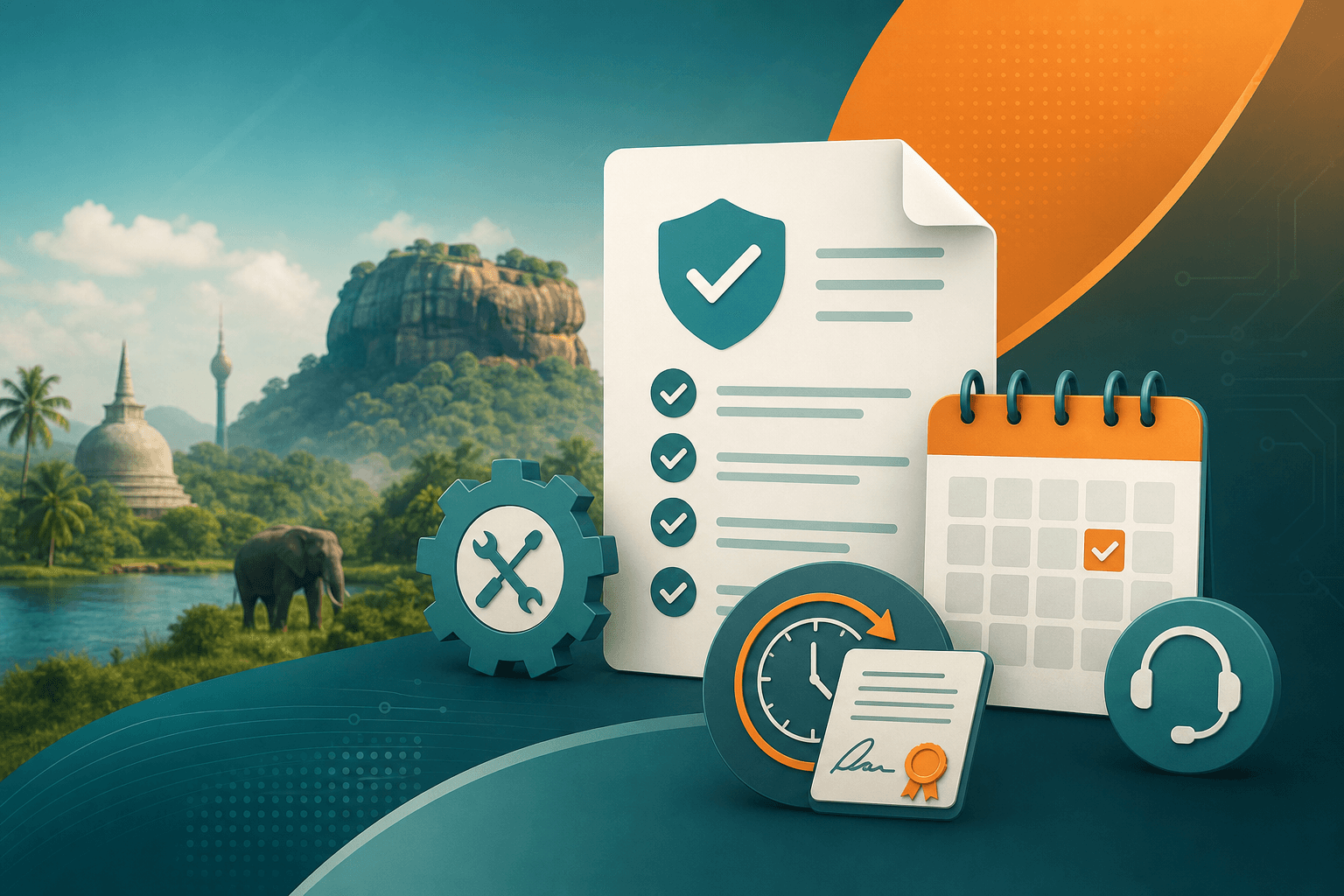
Software AMC in one sentence
A software Annual Maintenance Contract is a paid agreement where a vendor keeps your applications running — fixing bugs, applying updates, monitoring health, and responding to incidents under defined SLAs for a fixed period (usually 12 months).
It is different from hardware AMC (computers, printers, UPS). Software AMC covers code, databases, integrations, and the operational work that keeps users productive.
What a good software AMC includes
Strong contracts spell out four kinds of work. If a proposal only says “support,” push for this breakdown.
- Corrective — fix defects and restore service after incidents
- Preventive — patches, dependency updates, backup checks, health reviews
- Adaptive — keep the system working when OS, browsers, or APIs change
- Perfective — small usability and performance improvements within a monthly budget
When Sri Lankan businesses need an AMC
You need a software AMC when the system is business-critical, the original developers are gone, or ad-hoc freelancers cannot commit to response times. Common triggers: a failed go-live handoff, rising downtime, audit findings, or a vendor that disappeared after warranty.
If the product is still changing weekly, you may need a development retainer plus AMC — or a dedicated team — rather than maintenance alone.
How software AMC is priced
Typical models: a percentage of build cost (often 15–25% per year), a monthly retainer based on ticket volume and severity tiers, or a hybrid with a base fee plus capped enhancement hours.
Cheap AMCs that exclude monitoring, security patches, or after-hours critical incidents are not bargains — they shift risk back to you.
Questions to ask before you sign
Ask for severity definitions, response vs resolution times, what happens when monthly enhancement hours are used up, who owns the code and credentials, and how knowledge is documented if the vendor changes.
Frequently asked questions
Related articles
Software Support SLA Best Practices: Response Times That Actually Work
How to write software support SLAs that operations teams can meet — severity levels, response vs resolution, business hours, and reporting for Sri Lankan enterprises.
Software Development Costs in Sri Lanka: 2026 Pricing Guide
Transparent breakdown of custom software development costs in Sri Lanka — hourly rates, project tiers, and what drives pricing for web, mobile, and enterprise systems.
How to Choose a Software Development Partner: 12-Point Evaluation Framework
A due diligence checklist for selecting a software development company — covering technical capability, communication, security, and long-term partnership fit.