API Integration Best Practices for Modern Applications
Design, build, and maintain robust API integrations — REST conventions, authentication, error handling, versioning, and monitoring for production systems.
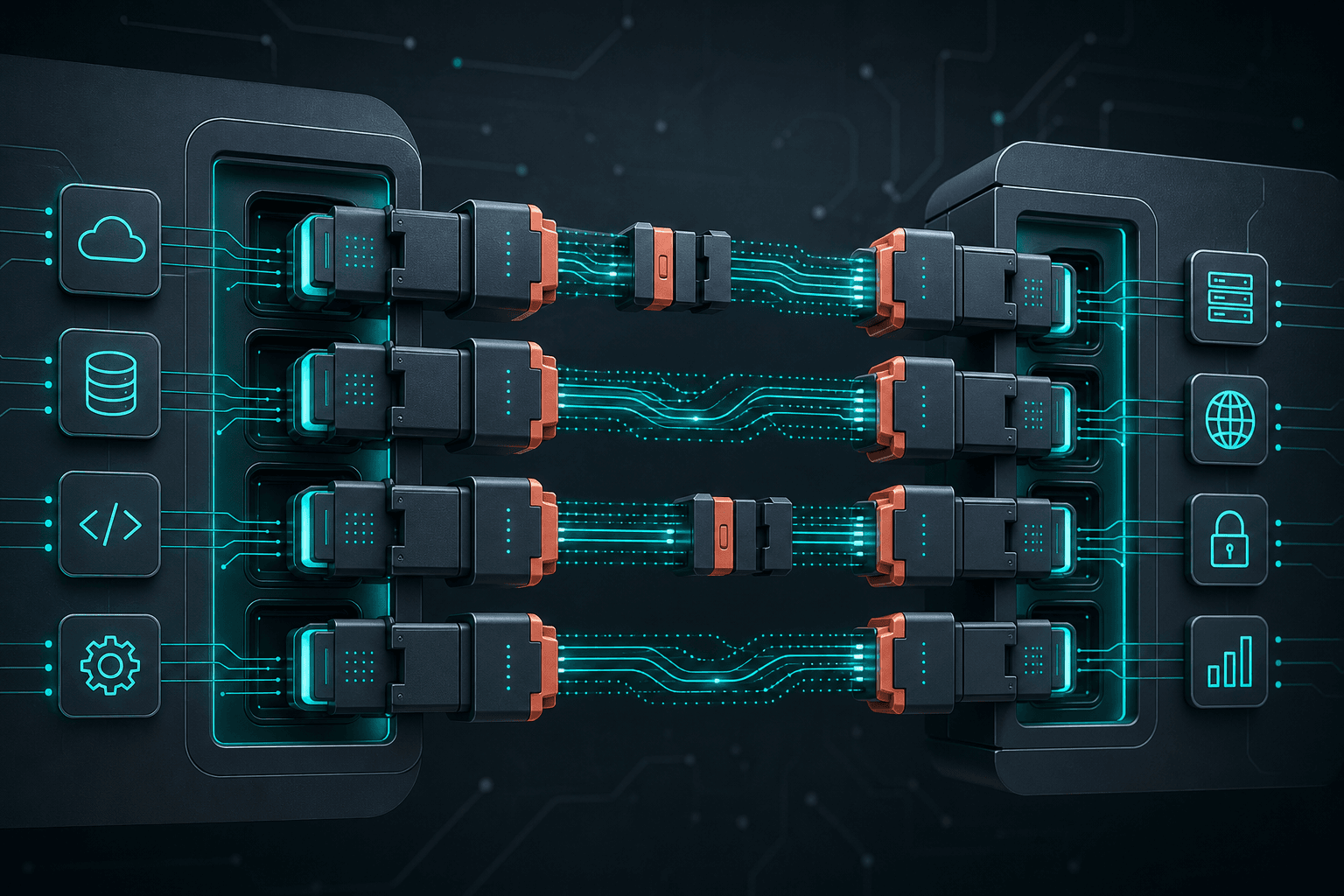
API Design Fundamentals
Well-designed APIs are the backbone of modern software. Whether connecting mobile apps to backends, integrating SaaS tools, or exposing government services to citizens, API quality determines integration speed and system reliability.
REST Conventions
Consistent conventions reduce integration time for every consumer.
- Resource-based URLs: /api/v1/orders/{id}, not /api/getOrder
- HTTP verbs match intent: GET (read), POST (create), PUT (update), DELETE (remove)
- Consistent response envelope: { data, meta, errors }
- Pagination via cursor or offset with total counts
- Filtering and sorting via query parameters
Authentication & Security
Use OAuth 2.0 with JWT for user-facing APIs. API keys for server-to-server communication. Implement rate limiting, request validation, and CORS policies. Never expose internal IDs — use UUIDs. Log authentication failures for security monitoring.
Error Handling & Versioning
Return meaningful HTTP status codes with structured error bodies: { code, message, details, requestId }. Version APIs in the URL path (/v1/, /v2/) and maintain backward compatibility for at least 12 months after deprecation notices.
Implement circuit breakers and retry logic with exponential backoff for external API consumers. Document rate limits, timeout expectations, and SLA guarantees.
Monitoring & Documentation
Production APIs need observability: request latency percentiles, error rates, throughput, and dependency health dashboards. Auto-generate documentation from OpenAPI/Swagger specs. Provide sandbox environments for integration testing.
Elysian Crest builds API integration layers for government systems connecting 14+ departments — where reliability and documentation aren't nice-to-haves, they're requirements.
Frequently asked questions
Related articles
Mobile App vs PWA: Which Should You Build in 2026?
Native app, progressive web app, or hybrid? A decision framework based on your audience, features, budget, and distribution strategy.
Legacy System Modernization: From Monolith to Cloud-Native
Strategies for modernizing legacy enterprise systems — strangler fig pattern, API layers, database migration, and minimizing business disruption.